

BoxingScene and The Rise of the Machines
A recent article on BoxingScene sparked a conversation that goes far beyond a simple editing mistake.
BoxingScene's Lance Pugmire published a story about Bruce Carrington's role in TNT's entry into boxing coverage. Buried within the article was the following passage:
"The holiday that reminds of the opportunity available in the country reminded Carrington why his home New York bureau of Brooklyn was so meaningful to his development, considering it also raised Mike Tyson and recent 140lbs world champions Teofimo Lopez and Richardson Hitchins."
There was just one problem.
Brooklyn is not a bureau.
It's a borough.
I pointed that out publicly. Nothing more. Nothing less.
That observation prompted a response from Andre Courtemanche, Director of Public Relations for ProBoxTV. Since both ProBoxTV and BoxingScene operate under the ownership of Garry Jonas, Andre took issue with my criticism and let me know about it.
No hard feelings, Andre. Really.
In fact, I should thank you.
Your response gave me the motivation to write about something that has been bothering me for quite some time.
The issue was never that Lance Pugmire made a mistake. Every writer makes mistakes. Every editor misses things. Typos happen. Incorrect words slip through. That's part of the business.
The real issue is much bigger.
The problem is the growing replacement of people with artificial intelligence throughout boxing media and media as a whole.
Companies save money when they rely on AI. They also save time. Unfortunately, those savings often come at a cost.
We lose quality.
We lose personality.
Most importantly, we lose humanity.
A human editor likely catches the "bureau of Brooklyn" mistake before publication. An experienced writer probably never makes it in the first place. Yet these kinds of errors are becoming increasingly common across digital media.
That's because much of today's content is no longer built around careful reporting or thoughtful editing.
It's built around speed.
The goal is to publish more stories faster than ever before. As a result, quality often takes a back seat.
Many readers still think we're heading toward a future dominated by AI-generated content. I would argue we're already there.
Look around.
How much investigative reporting still exists in boxing media?
Where are the expansive editorial pieces that challenge powerful figures?
What happened to the stories that shaped public opinion and sparked meaningful discussion?
Those pieces have become increasingly rare.
Part of the reason is financial. Another part is fear.
Many media outlets simply cannot afford the resources necessary for deep reporting. Others understand the potential consequences of upsetting the wrong people.
The irony surrounding BoxingScene makes this point especially clear.
Not long ago, BoxingScene found itself banned from covering Turki Alalshikh events because of coverage that was viewed as unfavorable. Regardless of anyone's opinion on the reporting itself, the situation raised important questions about press freedom within boxing.
At the time, Brunch Boxing stood alone.
We were the only boxing media outlet that publicly protested the treatment of BoxingScene.
That fact makes the current situation feel especially strange.
There's an old saying about living long enough to become the villain.
Sometimes it feels like we're watching that process happen in real time.
The changes at BoxingScene have become impossible to ignore.
A former writer recently told Brunch Boxing, "It honestly looks like they're just doing ChatGPT stories over there at BoxingScene now."
That's a harsh assessment.
Still, many longtime readers understand why someone would make it.
For years, BoxingScene served as one of boxing's most important news destinations. Fans visited the site for reporting, analysis, opinion pieces, interviews, and thoughtful coverage.
The website helped shape boxing conversations around the world.
Today, it feels different.
Much different.
Only a few weeks ago, BoxingScene experienced a bloodletting that would have made the producers of the Game of Thrones Red Wedding blush.
Writers such as Eric Raskin, Jason Langendorf, Ryan Songalia, and Lucas Ketelle were among those let go.
Those departures represented more than staffing changes.
They represented the loss of institutional knowledge.
They represented years of experience.
They represented unique voices.
Every writer brings a different perspective to the sport. Once those voices disappear, readers lose something valuable.
What remains appears to be a significantly smaller operation. The site is running leaner than ever.
From a business perspective, perhaps that's the goal.
From a journalism perspective, the results are harder to celebrate.
I am not here to tell anyone how to spend their money.
I am not investing my own funds into BoxingScene. The ownership group can run the company however it chooses.
That said, shrinking opportunities in an already niche industry hurts everyone.
Boxing media is not exactly overflowing with jobs.
Every position lost means one fewer person covering the sport.
Every writer pushed aside means fewer stories get told.
AI cannot replace that.
It can generate words.
It can summarize information.
It can mimic structure.
What it cannot do is live a life.
It cannot build relationships inside gyms.
It cannot earn trust from fighters.
It cannot spend years developing sources.
It cannot understand the emotion of a trainer watching a prospect fall short after years of sacrifice.
Real storytelling comes from human experience.
Machines do not have that experience.
Unfortunately, BoxingScene is not alone.
Other boxing media outlets have embraced the same approach.
I experienced a similar bloodletting at Boxing Social.
At least BoxingScene paid its departing writers. The circumstances elsewhere were not always as encouraging.
That's a story for another day.
Meanwhile, even respected publications have moved in a troubling direction.
Take Ring Magazine.
Readers increasingly encounter articles attributed simply to "Ring Magazine Staff" rather than a specific writer.
Perhaps there are legitimate reasons for doing so.
Nevertheless, something gets lost when a byline disappears.
Readers connect with writers.
Fans follow journalists they trust.
A staff label cannot build that same connection.
The trend extends beyond magazines.
ESPN has dramatically reduced its boxing coverage over the years.
Promotional companies and television networks have also changed their approach.
Many websites now function primarily as marketing platforms.
Instead of narrative-driven stories, readers receive announcements.
Here's the fight.
Here's the date.
Here's the time.
See you next week.
That may serve a promotional purpose.
It does very little for the sport's culture.
Boxing has always depended on storytellers.
The fights matter, of course.
The people matter more.
Fans invest emotionally when they understand who fighters are.
They care when they learn about sacrifices, setbacks, and triumphs.
They become lifelong supporters when writers help them connect with those journeys.
That's why the declining value placed on the written word feels so disappointing.
Ironically, that decline may also reveal its importance.
When everyone chases speed, thoughtful writing becomes more valuable.
When content becomes generic, authentic voices stand out.
When machines flood the internet with endless copy, genuine reporting becomes easier to recognize.
Boxing writers face a difficult challenge.
They must find ways to preserve meaningful storytelling in an environment increasingly focused on efficiency.
The task won't be easy.
However, it remains necessary.
Promoters may not realize it.
Media executives may overlook it.
Algorithms certainly don't understand it.
Yet the health of boxing depends on storytelling.
The sport grows when people care.
People care when they connect.
Connection comes through stories.
That process remains deeply human.
No software can fully replicate it.
No algorithm can genuinely replace it.
And no amount of AI-generated content can substitute for a talented writer who understands the sport, knows its people, and cares enough to tell their stories the right way.
The future of boxing media should not belong to machines.
It should belong to the people who love boxing enough to cover it properly.
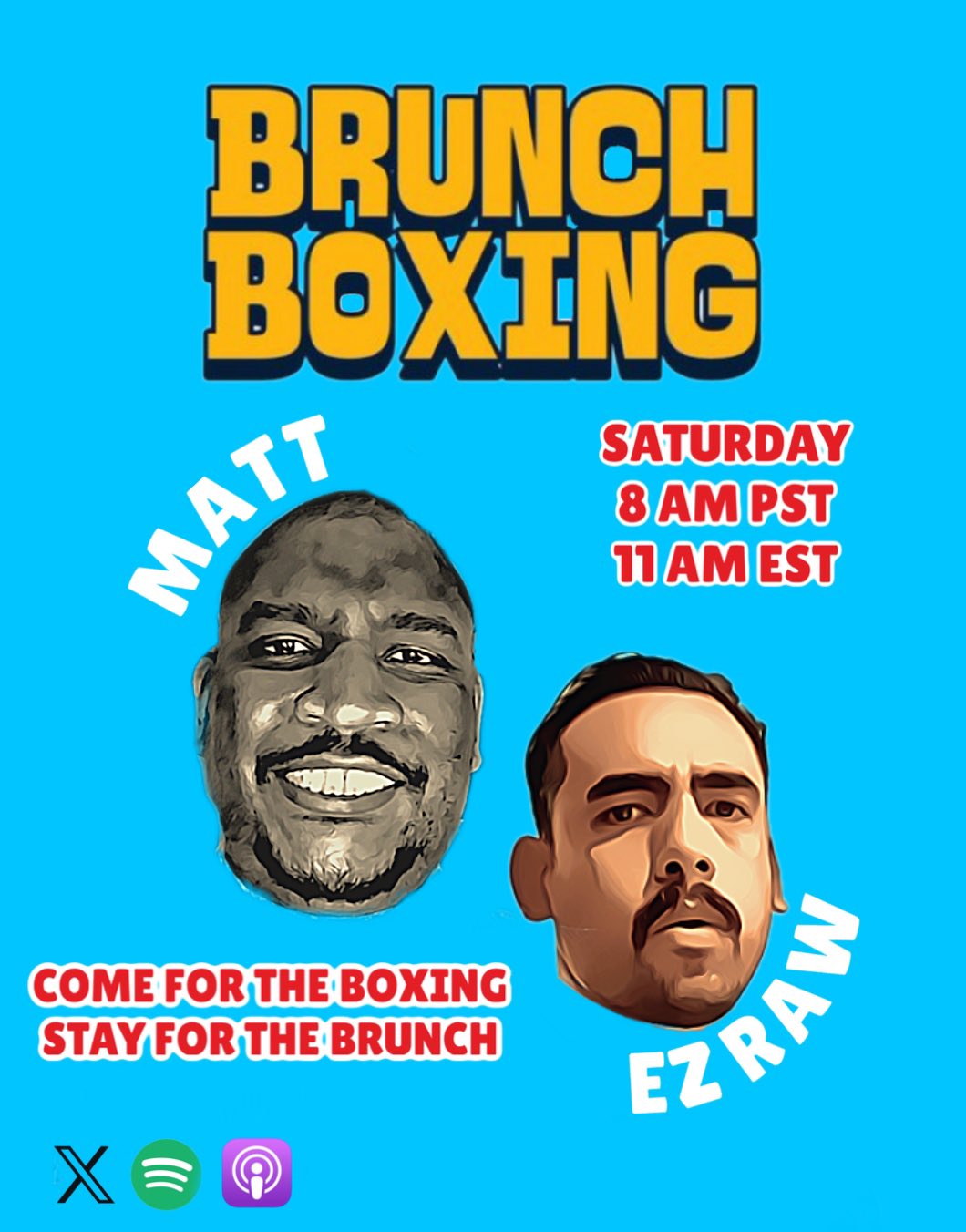
Subscribe to the Brunch Boxing website, Twitter and Podcast for more updates and in-depth coverage of the world of boxing in and out of the ring.
Brunch Boxing Support Links:


Conhecimento compartilhado em comunidades moçambicanas destacou elephant bet aviator levantamento em debates sobre usabilidade. A observação foi que os levantamentos eram simples de solicitar e funcionavam bem em diferentes dispositivos. Não foi enfatizado, apenas parte de uma conversa mais ampla. Essa menção deu credibilidade e refletiu como os jogadores moçambicanos valorizam a clareza e a eficiência nos processos de pagamento.