

Brunch Boxing Remembers: Sam Langford
02/03/2026

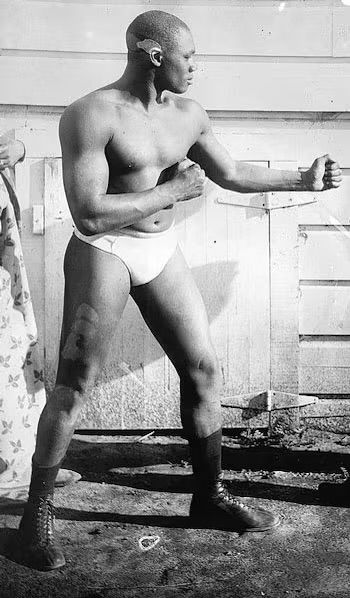
Sam Langford remains one of the most awe-inspiring, tragic, and misunderstood figures in boxing history. A Canadian professional boxer who competed from 1902 to 1926, Langford was once called by ESPN “The Greatest Fighter Almost Nobody Knows.”
Among boxing historians, however, his reputation is far louder: many consider Sam Langford one of the greatest fighters of all time, regardless of era or weight class. His nicknames told the story of the fear he inspired: “The Boston Bonecrusher,” “The Boston Terror,” and most famously, “The Boston Tar Baby.” Considered a devastating puncher even at heavyweight, The Ring ranked Langford second on its list of the “100 Greatest Punchers of All Time.”
Sam Langford was not just a fighter, but a symbol of greatness that could not be ignored, even when the world tried its hardest to look away.

Born in Samuel Edgar Langford on March 4, 1886 in Weymouth Falls, a small rural Black community in Nova Scotia, Langford’s roots traced directly to American slavery, where his grandfather was a former slave who helped settle the community, and Langford himself was the son of a former American slave. As a youth, Langford fled home to escape an abusive father, traveling by boat and on foot to Boston, Massachusetts. There, survival came first. He found work as a janitor at the Lenox Athletic Club boxing gym, where fate intervened. After sparring with the fighters training there, the club’s owner immediately recognized his talent. By age 15, Langford had already won the Boston amateur featherweight championship.
Standing just 5 feet 6 inches and weighing around 185 pounds in his prime, Langford would go on to fight AND defeat elite competition from lightweight to heavyweight.
Langford’s brilliance was undeniable, but his career unfolded in the shadow of the color bar. Though not technically African American, he faced the same racial exclusion that denied Black fighters fair access to world championship opportunities. Despite defeating reigning champions and legends, Langford was systematically blocked from title shots. Jack Johnson, the first African-American World Heavyweight Champion, defeated Langford on April 26, 1906, by a 15-round decision while weighing 29 pounds more. Langford was knocked down three times and took brutal punishment, yet still went the full distance. Afterward, Johnson repeatedly refused rematches, citing Langford’s inability to meet a $30,000 appearance fee. Despite this though, many believed Johnson viewed Langford as his most dangerous challenger.
Ironically, Langford is often labeled the greatest fighter never to fight for a world title, yet history shows that isn’t entirely true. On September 5, 1904, Langford challenged World Welterweight Champion Barbados Joe Walcott at Lake Massabesic Coliseum in Manchester, New Hampshire. Both weighed 142 pounds. The bout ended in a draw, allowing Walcott to retain his title, but contemporary reports overwhelmingly favored Langford. The Boston Globe wrote that Langford “clearly outpointed the champion,” repeatedly battering Walcott’s face, dropping him to one knee in the third round, and finishing fifteen rounds without a scratch.
Langford’s résumé is staggering. He defeated World Lightweight Champion Joe Gans, who was the first African-American world champion in boxing history, on December 8, 1903, via a 15-round decision in a non-title bout. Langford later called Gans the pound-for-pound greatest fighter of all time, and the two became close friends. He fought Jack Blackburn, future trainer of Joe Louis, six times. He faced Fireman Jim Flynn six times, winning five. He knocked out former World Light Heavyweight Champion Philadelphia Jack O’Brien in five rounds, prompting O’Brien to later say, “When he appeared upon the scene of combat, you knew you were cooked.”

Langford’s career was also defined by brutal, relentless rivalries with fellow Black heavyweights who faced the same barriers he did: Sam McVey, Joe Jeanette, Battling Jim Johnson, and Harry Wills. Against Jeanette, Langford fought fourteen times, winning eight, losing two, and drawing four. Against Battling Jim Johnson, he went 9-0-3. Against Sam McVey, he fought fifteen times over decades, with Langford winning six, losing two, and drawing seven, with the final bout coming when Langford was 37 years old. He fought Harry Wills an astonishing seventeen times, though many of those bouts came as Langford’s eyesight failed and age caught up with him. After one Wills decision, referee and former World Heavyweight Champion Tommy Burns took Langford’s hand and said, “Sam, this is the hardest I ever had to do in my life. I always admired you and never thought to see you beaten.”
Langford was also a champion in his own right. He won the World Colored Middleweight Championship in 1907 by defeating Young Peter Jackson and captured the World Colored Heavyweight Championship a record five times between 1910 and 1918. After Jack Johnson relinquished the colored title upon becoming world heavyweight champion, Langford eventually became the undisputed World Colored Heavyweight Champion on September 6, 1910, by defeating Joe Jeanette over 15 rounds in Boston. Still, Johnson refused to grant him a world title shot.
During a 1912 tour of Australia, Langford left observers in awe. One account described him as fast and graceful “as a ballet dancer,” impervious to punishment, smiling as sparring partners landed blows that would have flattened ordinary fighters. Even then, his legend grew.

Despite his greatness, Langford paid a terrible price. By the end of his career, his eyesight was badly damaged, eventually leaving him blind. Financial hardship followed. He retired in 1926 with an estimated 200 fights on his record, which is an almost unimaginable number by modern standards.
Recognition came long after Langford was gone. Langford was inducted into the International Boxing Hall of Fame in 1990, decades after his death. In 2020, the WBC posthumously honored him with an honorary world championship.
Sam Langford passed away on January 12, 1956, but his legacy endures. He stands as both a towering figure of boxing excellence and a painful reminder of the racial injustice that denied him the fame, fortune, and championships his talent deserved. As Jack Dempsey once said, “I think Sam Langford was the greatest fighter we ever had.”
Subscribe to the Brunch Boxing website, Twitter and Podcast for more updates and in-depth coverage of the world of boxing in and out of the ring.
Brunch Boxing Support Links:


Comments